Cytotoxic Cabinet Testing


HEPA FILTER TESTING
/
FUME CUPBOARD TESTING
/
BIOLOGICAL SAFETY CABINETS
/
CLEAN WORK STATIONS
/
CYTOTOXIC DRUG SAFETY CABINET TESTING
/
CLEANROOM VALIDATION
/
HEPA FILTER TESTING / FUME CUPBOARD TESTING / BIOLOGICAL SAFETY CABINETS / CLEAN WORK STATIONS / CYTOTOXIC DRUG SAFETY CABINET TESTING / CLEANROOM VALIDATION /
Cytotoxic Drug Safety Cabinets (CDSCs) provide the primary barrier against exposure to hazardous aerosols released during the preparation, handling, and dispensing of cytotoxic drugs. Regular testing is essential to ensure these cabinets continue to protect staff and the surrounding environments.
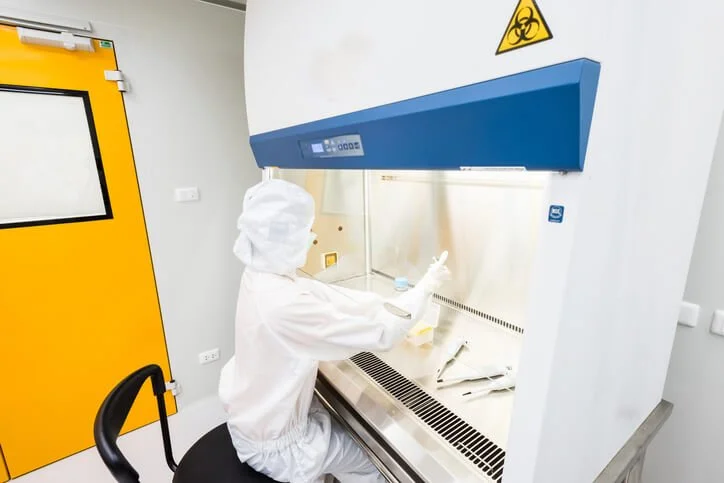
Why Testing is Essential

Without proper cytotoxic cabinet testing, CDSCs may expose personnel to dangerous particles that accumulate within filters and mechanical components, or allow contaminants to spread into adjacent work areas.
Personnel Protection - Safeguards maintenance staff from exposure to accumulated drug particles that contaminate filters and mechanical components.
Environmental Safety - Protects surrounding areas and personnel not involved in cytotoxic drug preparation and use.
When do you test cytotoxic drug safety cabinets?
Testing is required at the following intervals:
Initial commissioning: On-site prior to first use.
After relocation: When cabinets are moved to new locations.
Post maintenance: After mechanical or electrical maintenance, including HEPA filter replacement.
Annual certification: At least every 12 months for ongoing compliance.
AG&G Services provides comprehensive certification in accordance with AS 2252.5 (2017). Testing covers both performance and operational safety:
Compliance Test Requirements
-
Air velocity and uniformity in the work zone
Work zone integrity verification
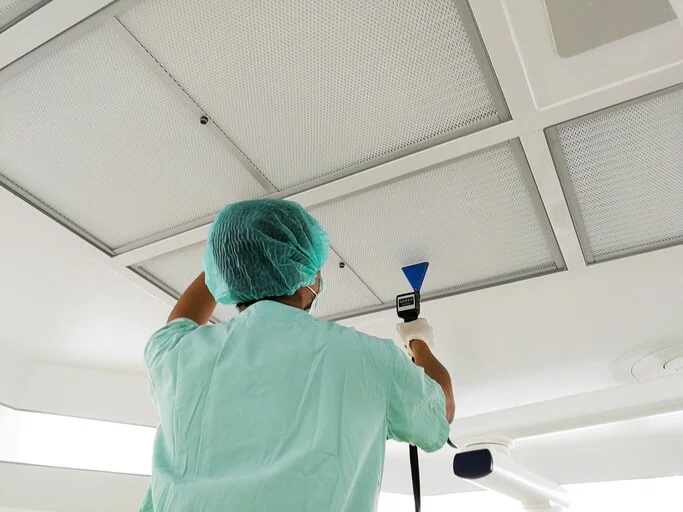
HEPA filter installation integrity
Air classification particle counting (ISO 5)
Air barrier containment assessment
-
Noise level measurement
Luminance verification
Alarm checks (where applicable)
UV radiation intensity (where applicable)
AG&G Services is NATA-accredited to certify CDSCs to the highest standards.
This ensures your cabinets provide effective protection for personnel, environments, and compliance requirements.
Why Choose AG&G Services for Cytotoxic Drug Safety Cabinet Testing?
AG&G Services is a NATA-accredited testing provider (No. 15401) with specialised expertise in contamination control and laboratory safety systems. Our testing is fully recognised across Australia and accepted for compliance, audit, and regulatory requirements.
We understand the high-risk nature of oncology and pharmaceutical environments. That’s why our CDSC testing is performed with precision, using calibrated equipment and validated procedures to ensure accurate airflow, containment, and HEPA filtration performance. This means every cytotoxic cabinet testing service is carried out with a strong focus on safety, accuracy, and regulatory compliance.
We are also trusted by hospitals, oncology units, and pharmaceutical facilities across Australia for delivering clear, audit-ready reporting and reliable certification outcomes.
With Australia-wide coverage, fast reporting, and a dedicated compliance team, AG&G Services makes it easier for facilities to stay safe, compliant, and fully operational.
Our CDSC Testing Process
Initial Safety Inspection
We inspect the cytotoxic cabinet for physical condition, airflow performance, and operational integrity.
Cytotoxic Cabinet Testing
We perform detailed cytotoxic drug safety cabinet testing including airflow velocity, containment checks, and HEPA filtration integrity.
Performance Validation
We verify that the cabinet meets required AS/ISO and GMP compliance standards for hazardous drug handling.
Reporting & Certification
You receive a full audit-ready report confirming compliance status and test results.
Corrective Actions (if required)
If issues are identified, we provide clear recommendations to restore compliance and safety.
Benefits of Cytotoxic Drug Safety Cabinet Testing
One of the key benefits of routine NATA cytotoxic cabinet testing is worker safety. These cabinets are designed to protect healthcare staff from exposure to toxic drugs that can cause serious health risks if containment fails. Regular testing ensures airflow systems and HEPA filtration are functioning correctly to maintain full protection.
Another major benefit is patient and product safety. In pharmacy compounding and oncology environments, even minor contamination can compromise medication integrity. Proper CDSC testing ensures sterile conditions are maintained during drug preparation and handling.
From a compliance perspective, cytotoxic drug safety cabinet testing in Australia helps facilities meet strict AS/ISO standards, GMP requirements, and workplace health and safety regulations. This reduces the risk of audit failures and regulatory penalties.
Routine NATA-accredited cytotoxic cabinet testing also helps detect early system faults, such as airflow imbalances, filter degradation, or mechanical issues, before they become critical failures.
Explore More
AG&G Services provides a full range of contamination control and laboratory compliance solutions:
HEPA Filter Testing →
Air filtration performance verification
Fume Cupboard Testing →
Laboratory ventilation safety checks
Biological Safety Cabinet Testing →
Laboratory containment certification
Cleanroom Validation →
Full AS/ISO compliance testing
Clean Work Stations →
Sterile workspace performance checks
FAQS
Why is cytotoxic cabinet testing important?
It is critical because cytotoxic drugs are highly toxic and can pose serious health risks if exposure occurs. Testing ensures that staff are fully protected, contamination is controlled, and drug preparation areas remain safe and compliant.
What does cytotoxic drug safety cabinet testing include?
Testing typically includes airflow velocity measurements, HEPA filter integrity testing, smoke containment testing, pressure checks, and full-system performance validation against AS/ISO and GMP requirements.
What happens if a cytotoxic cabinet fails testing?
If a cabinet fails testing, it means the system is not providing adequate containment or airflow protection. A detailed report is issued outlining the issue, and corrective actions must be completed before the cabinet can be re-certified for use.
Who needs cytotoxic drug safety cabinet testing services?
Hospitals, oncology departments, cancer treatment centres, compounding pharmacies, pharmaceutical manufacturers, and research facilities that handle hazardous drugs require regular CDSC testing.
What is the difference between cytotoxic cabinet testing and maintenance?
Testing verifies performance, airflow, and compliance. Maintenance involves servicing, repairs, and adjustments to restore or improve system functionality.