BIOLOGICAL SAFETY CABINETS
HEPA FILTER TESTING
/
FUME CUPBOARD TESTING
/
BIOLOGICAL SAFETY CABINETS
/
CLEAN WORK STATIONS
/
CYTOTOXIC DRUG SAFETY CABINET TESTING
/
CLEANROOM VALIDATION
/
HEPA FILTER TESTING / FUME CUPBOARD TESTING / BIOLOGICAL SAFETY CABINETS / CLEAN WORK STATIONS / CYTOTOXIC DRUG SAFETY CABINET TESTING / CLEANROOM VALIDATION /
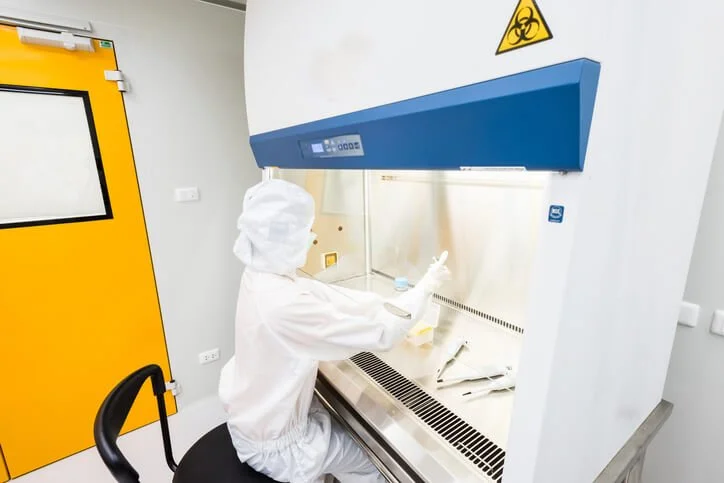
Biological Safety Cabinets (BSCs) are among the most critical pieces of laboratory equipment, using advanced airflow and HEPA filtration to protect personnel, products, and the environment from biological hazards. Reliable testing is essential to ensure they perform as intended.

Many laboratory-acquired infections result from aerosols generated during routine procedures. If a BSC fails, these invisible hazards can escape containment - putting staff safety, research integrity, and regulatory compliance at risk.
Regular testing ensures cabinets perform reliably when safety matters most.
Why is Testing
Essential?

Protection
Classifications
Class I - Protect personnel and environment through inward airflow and HEPA-filtered exhaust.
Class II - Triple protection: personnel, environment, AND products via laminar airflow technology.
Class III - Maximum containment for the most dangrous biological agents.
Schedule your BSC testing today - your safety depends on systems that work.


Comprehensive Certification
/02
WORK ZONE PROTECTION
Complete containment validation.
/04
OPERATIONAL SAFETY
Noise, luminance, alarms, and UV radiation (where applicable).
/01
AIRFLOW PERFORMANCE
Velocity, uniformity, and containment verification.
/03
HEPA FILTER INTEGRITY
Installation and filtration effectiveness.
Our NATA accredited testing ensures full compliance with Australian Standards AS 2252.1-3.
Why Choose Biological Safety Cabinet Testing from AG&G Services?
Choosing the right BSC testing provider is critical because inaccurate testing can put staff safety, product integrity, and compliance at risk.
AG&G Services is a leading BSC cabinet testing company in Australia, trusted by hospitals, universities, pharmaceutical manufacturers, and government laboratories.
We are NATA-accredited, meaning our results are legally recognised and accepted during audits and regulatory inspections. This ensures your facility remains fully compliant with Australian safety requirements. Our technicians understand the strict requirements of laboratory safety systems, ensuring every biosafety cabinet testing process is accurate, consistent, and audit-ready.
We also provide clear reporting, real-time documentation, and nationwide service coverage, making compliance simple for facility managers and safety officers.
Our Biological Safety Cabinet Testing Process
Initial Inspection
We assess the physical condition and operational setup of the cabinet.
BSC Testing & Airflow Verification
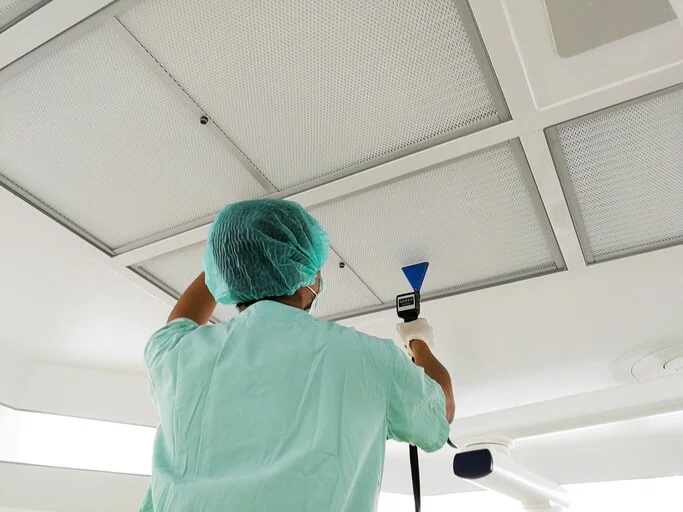
We perform full biological safety cabinet testing, including airflow velocity, HEPA integrity, and containment checks.
Performance Validation
We verify compliance with AS/ISO laboratory safety standards.
Reporting & Certification
You receive an audit-ready compliance report with clear pass/fail results.
Corrective Recommendations (if needed)
If issues are identified, we provide clear steps to restore compliance.
Benefits of Biological Safety Cabinet Testing for Your Facility
Regular biological safety cabinet testing is essential for maintaining a safe and compliant laboratory environment. It ensures that your cabinets are functioning properly and providing the level of protection required when handling biological materials.
One of the key benefits of routine biosafety cabinet testing is improved safety for laboratory staff. Proper airflow and HEPA filtration reduce the risk of exposure to hazardous biological agents, protecting both people and processes.
It also ensures product and sample integrity. In research, pharmaceutical, and healthcare environments, even minor contamination can affect results, compromise studies, or lead to costly product loss. Regular BSC testing helps prevent these issues before they occur.
From a compliance perspective, scheduled safety cabinet testing supports adherence to AS/ISO and GMP standards. This reduces the risk of audit failures, regulatory breaches, or operational shutdowns.
Another major benefit is equipment longevity. Routine testing and early fault detection help reduce long-term repair costs and extend the life of your biological safety cabinets.
Explore More
HEPA Filter Testing →
Air filtration performance verification
Fume Cupboard Testing →
Laboratory ventilation safety checks
Cleanroom Validation →
AS/ISO 14644 compliance certification
Clean Work Stations →
Contamination-free workspace testing
Cytotoxic Drug Safety Cabinets Testing →
High-risk drug handling safety
FAQS
1. What is biological safety cabinet testing and why is it required?
Biological safety cabinet testing is a regulated process that ensures safety cabinets function correctly by verifying airflow, filtration, and containment performance. It is required to protect staff, maintain sample integrity, and meet compliance standards in laboratory environments.
2. What does biosafety cabinet testing include?
Biosafety cabinet testing typically includes airflow velocity measurements, HEPA filter integrity testing, smoke containment testing, and operational performance verification to ensure the cabinet operates safely and effectively.
3. What is the difference between BSC testing and safety cabinet testing?
There is no difference in meaning. BSC testing, biosafety cabinet testing, and safety cabinet testing all refer to the same compliance process for verifying laboratory safety cabinet performance.
4. How often should biological safety cabinets be tested in Australia?
Most laboratories require testing every 6 to 12 months. High-risk environments, such as pharmaceutical manufacturing or pathology labs, may require more frequent testing, depending on internal risk assessments and regulatory requirements.
5. What happens during a BSC testing service visit?
A technician performs a full inspection of the cabinet, conducts airflow and HEPA filter testing, verifies containment performance, and provides a detailed compliance report with results and recommendations.
6. What is the role of a BSC cabinet testing company?
A BSC cabinet testing company provides certified inspection, testing, validation, and reporting services to ensure biological safety cabinets meet required Australian and international standards.
7. Why is NATA accreditation important for biosafety cabinet testing?
NATA accreditation ensures that testing is independently verified and meets national scientific standards. It guarantees that results are legally recognised and accepted during audits and regulatory inspections.