CLEAN WORK STATIONS
HEPA FILTER TESTING
/
BIOLOGICAL SAFETY CABINETS
/
FUME CUPBOARD TESTING
/
CLEAN WORK STATIONS
/
CYTOTOXIC DRUG SAFETY CABINET TESTING
/
CLEANROOM VALIDATION
/
HEPA FILTER TESTING / BIOLOGICAL SAFETY CABINETS / FUME CUPBOARD TESTING / CLEAN WORK STATIONS / CYTOTOXIC DRUG SAFETY CABINET TESTING / CLEANROOM VALIDATION /
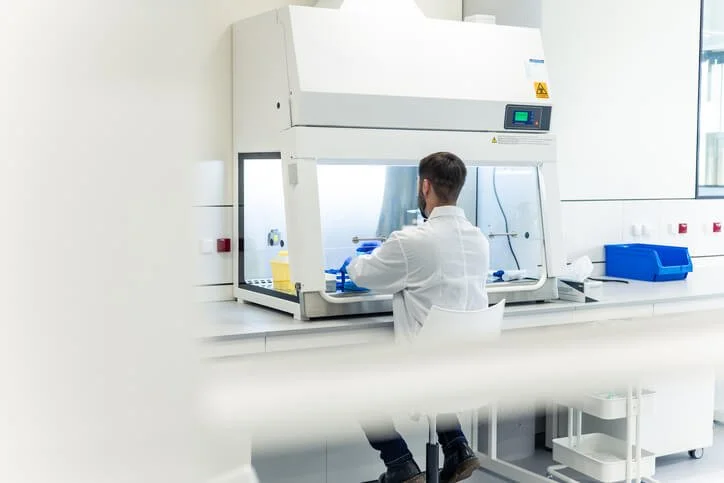
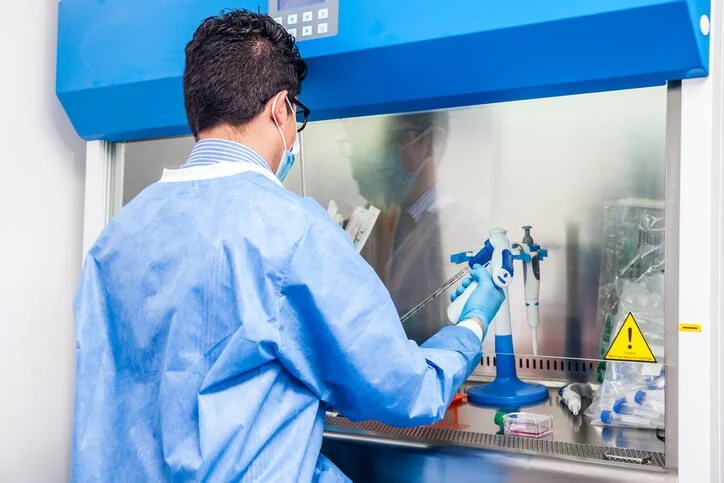
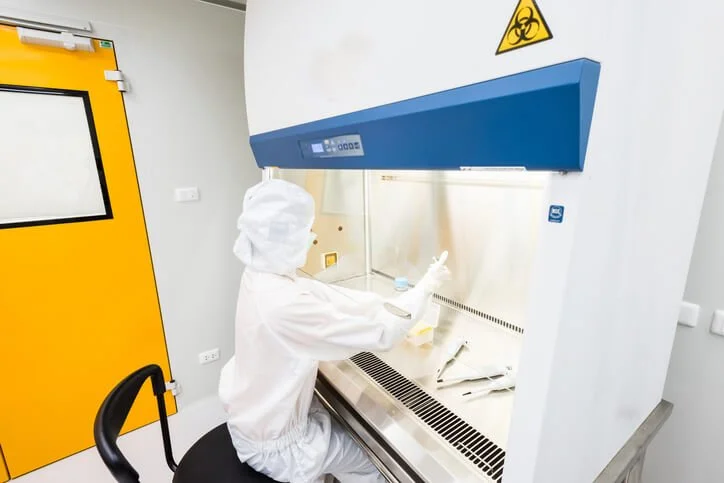
Laminar flow cabinets, or clean work stations, create ultra-clean, particle-free environments essential for protecting sensitive products and processes. They rely on advanced HEPA filtration and unidirectional airflow to maintain contamination-free conditions.

How do they work?
Air passes through pre-filters and HEPA filters (removing particles down to 0.3 microns), then flows in a smooth, laminar stream across the work surface. This continuous airflow maintains a controlled environment that protects products from airborne contamination.
Product Protection Only
Important: These cabinets protect products, not personnel. Never use with viable pathogens or hazardous biological materials.
Industry Applications
Clean work stations are critical for contamination-sensitive tasks, including:
-
Sterile compounding and drug preparation.
-
Cell culture and sample preparation.
-
Precision assembly and testing.
Ensure optimal performance with professional testing from AG&G Services.
Main tests provided for clean work stations
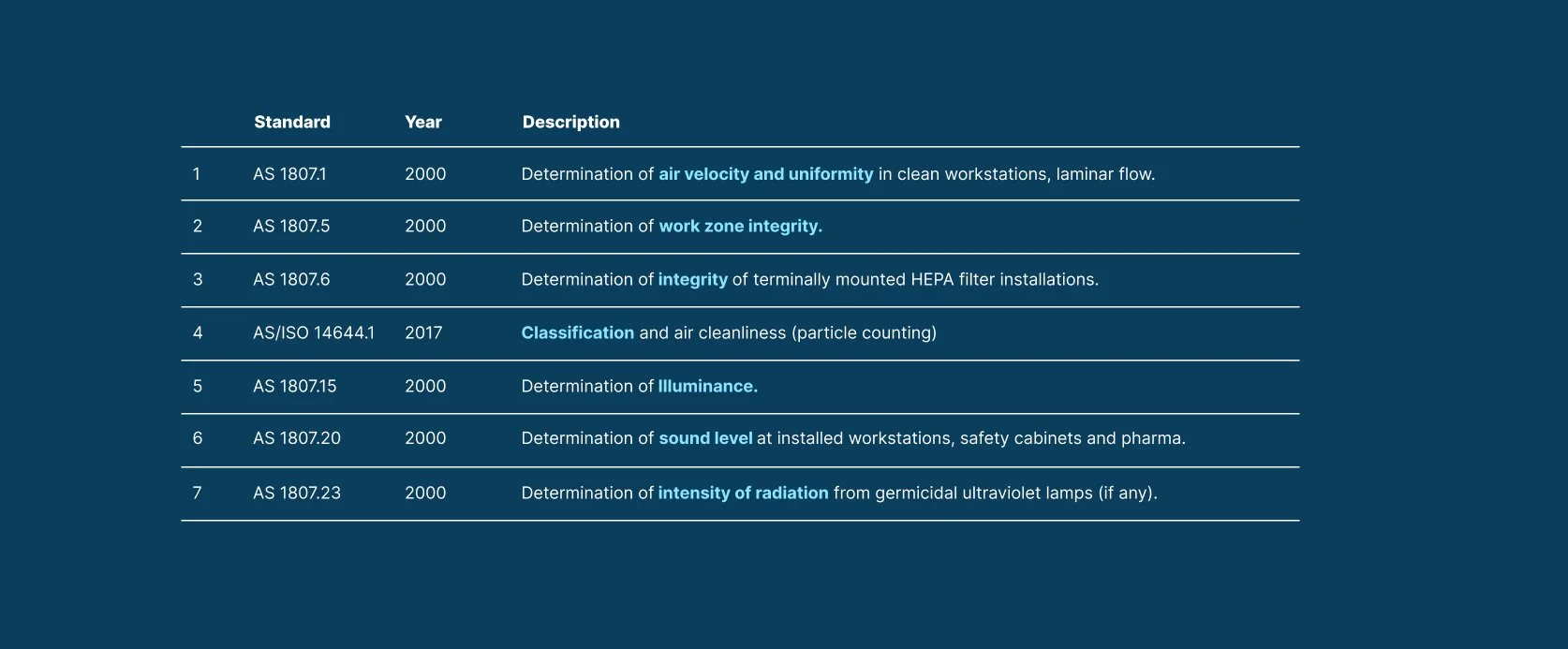
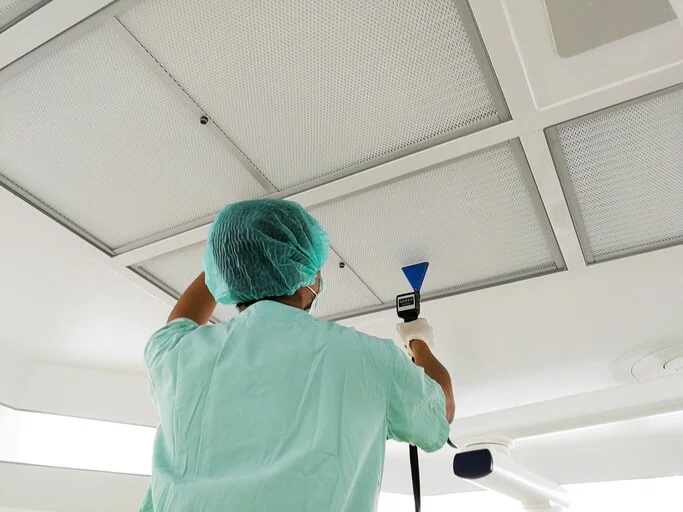
AG&G Services provides professional testing to ensure your clean work stations operate as designed.
With regular validation, you can maintain product saftey, meet compliance standards, and protect the integrity of your processes.
How do they work?
Air passes through pre-filters and HEPA filters (removing particles down to 0.3 microns), then flows in a smooth, laminar stream across the work surface. This continuous airflow maintains a controlled environment that protects products from airborne contamination.
Product Protection Only
Important: These cabinets protect products, not personnel. Never use with viable pathogens or hazardous biological materials.
Industry Applications
Clean work stations are critical for contamination-sensitive tasks, including:
-
Medical & Pharmaceutical
Sterile compounding and drug preparation. -
Scientific Research
Cell culture and sample preparation. -
Electronics & Quality Control
Precision assembly and testing.
Why Choose AG&G Services for Clean Bench & Laminar Flow Testing?
Choosing the right provider for clean bench and laminar flow testing is critical, as even small errors in airflow measurement or filtration testing can compromise sterile environments and increase contamination risk.
AG&G Services is a trusted NATA-accredited testing provider (No. 15401) specialising in contamination control systems across Australia. We don’t just perform basic checks; we deliver fully compliant, audit-ready certification that meets AS/ISO standards for laboratories, hospitals, pharmaceutical facilities, and research environments.
Our team focuses exclusively on laminar flow hood testing, clean bench validation, and high-level contamination control systems. This means we understand the strict requirements of sterile environments and the importance of accurate airflow performance.
With Australia-wide coverage, real-time reporting, and a secure compliance portal, we make it simple for facility managers to track, manage, and maintain their certification requirements.
Our Clean Bench Clean work station & Laminar Flow Testing Process
Equipment Inspection
We assess your clean work station bench or laminar flow hood for physical condition and operational setup.
Laminar Flow Testing
We perform detailed laminar flow testing using calibrated equipment to measure airflow velocity, uniformity, and particle levels.
Clean Bench Laminar Flow Performance Verification
We validate system performance to ensure sterile working conditions are maintained.
Reporting & Certification
You receive a full compliance report confirming whether your system meets required AS/ISO standards.
Recommendations (if required)
We provide corrective actions if airflow issues or contamination risks are detected.
Benefits of Clean Bench Clean work station & Laminar Flow Testing
Regular Clean Bench Clean work station testing ensures that sterile environments remain free from airborne contamination during sensitive laboratory procedures.
Proper laminar flow testing protects samples, research integrity, and product quality by ensuring consistent, clean airflow.
Routine laminar flow hood testing helps detect system faults early, reducing downtime and preventing contamination-related failures.
For facility managers, laminar flow clean bench testing ensures compliance with AS/ISO standards and reduces audit risk.
Overall, regular testing improves safety, reliability, and operational efficiency in controlled environments.
Explore More Services
AG&G Services provides complete contamination control and laboratory compliance solutions:
HEPA Filter Testing →
Air filtration performance verification
Fume Cupboard Testing →
Laboratory ventilation safety checks
Biological Safety Cabinet Testing →
Cabinet airflow & containment certification
Cleanroom Validation →
Full AS/ISO compliance testing
Cytotoxic Drug Safety Cabinets Testing →
High-risk handling safety validation
FAQS
1. What is Clean Bench Clean work station testing?
Clean Bench Clean work station testing is a compliance process that verifies whether a clean bench provides a sterile, particle-free airflow environment. It ensures that sensitive laboratory work is protected from airborne contamination during use.
2. What is laminar flow testing used for?
Laminar flow testing is used to verify that air is flowing in a smooth, uniform direction without turbulence. This ensures that the workspace remains free from airborne particles that could contaminate samples or products.
3. What is laminar flow hood testing?
Laminar flow hood testing evaluates the performance of laminar flow cabinets or hoods by measuring airflow velocity, HEPA filtration efficiency, and contamination control performance.
4. What is laminar flow clean bench testing?
Laminar flow clean bench testing ensures that clean benches maintain a controlled, sterile environment suitable for laboratory, pharmaceutical, or research applications where contamination control is critical.
5. What is NATA laminar flow cabinet testing?
NATA laminar flow cabinet testing refers to accredited testing conducted in accordance with NATA standards. It ensures results are scientifically valid, independently verified, and accepted by Australian regulators and auditors.
6. Why is laminar flow testing important?
Laminar flow testing is important because it ensures sterile airflow conditions are maintained. Without proper airflow control, contamination can enter the workspace and affect samples, research accuracy, or product safety.
7. How often should Clean work station clean benches and laminar flow hoods be tested?
Most facilities require testing every 6 to 12 months. High-risk environments such as pharmaceutical production or microbiology labs may require more frequent testing based on internal risk assessments.
8. What happens if a laminar flow system fails testing?
If a system fails, it means airflow, filtration, or containment is not within acceptable limits. A detailed report is provided, outlining the corrective actions required before the system can be recertified for use.